Career and Workforce Skills meet CASE®!
For years, the Competencies and Academic Standards Exchange (CASE®) format has quietly done a lot of heavy lifting in K-12 education. Developed by the 1EdTech™ community, CASE gives states, districts, and curriculum providers a common, machine-readable way to publish academic standards so they can be referenced consistently across student information systems, learning management products, assessment platforms, and instructional materials.
What's changed is where CASE is now headed. In late July, the International Accreditors for Continuing Education and Training (IACET) announced that its ANSI/IACET 1-2018 Standard for Continuing Education and Training is now available in CASE format making it one of the first frameworks to extend this level of interoperability into the continuing education and training sector.
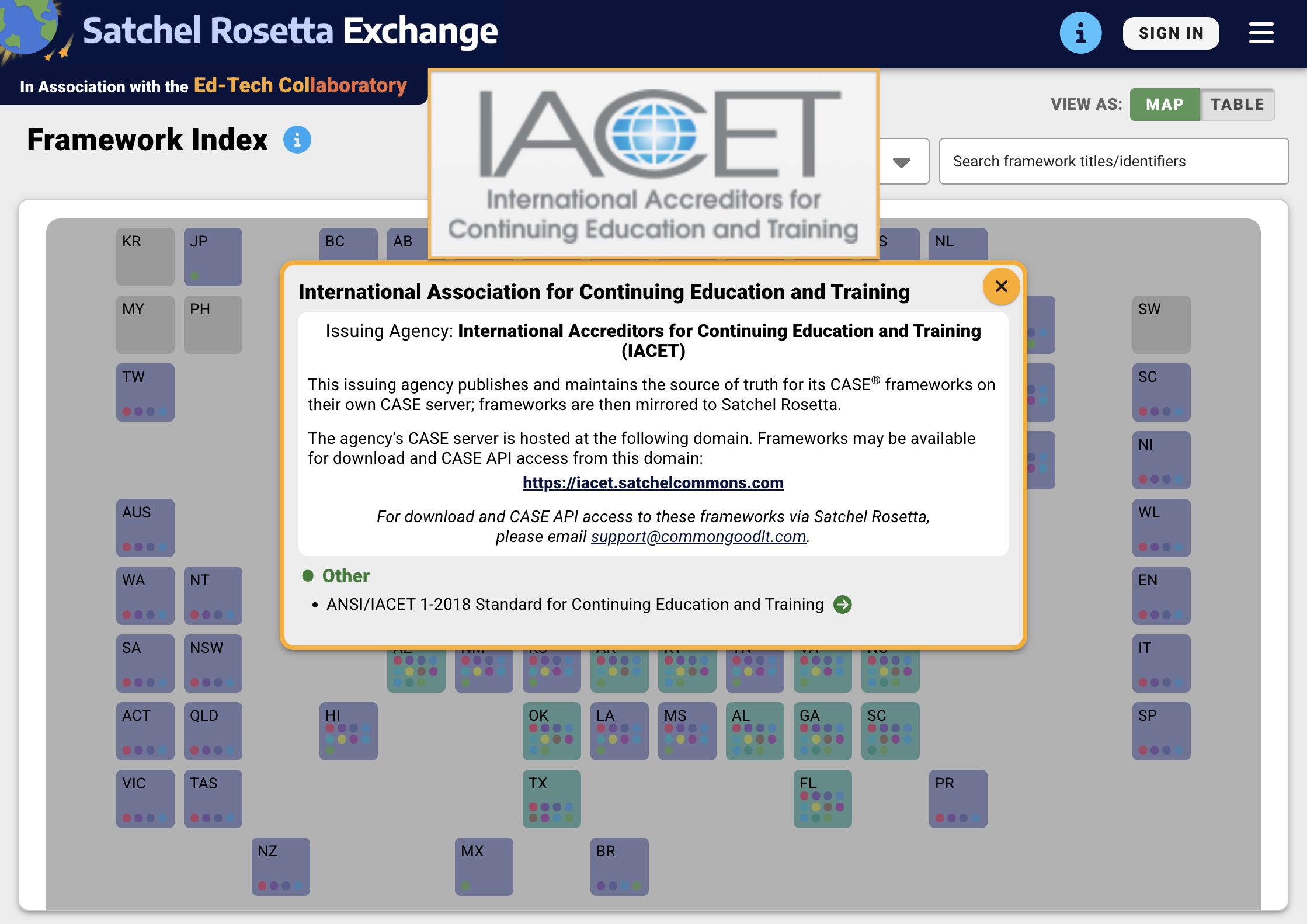
*The IACET framework is also available from https://iacet.satchelcommons.com/
Why CASE Matters to Workforce Learning
At first glance, an interoperability format widely used in K-12 for standards and competencies may seem unrelated to workforce skill management. But the underlying problem CASE solves, which is making learning outcomes referencable, comparable, and machine-readable across disconnected system, is just as real in continuing education, corporate training, and credentialing as it is in a K-12 school district.
IACET President and CEO Randy Bowman framed the move as being about more than technology adoption (read the full press release here). As he put it, publishing the ANSI/IACET 1-2018 Standard in CASE format is about connecting continuing education and training to the broader learn-and-work ecosystem through a shared, interoperable framework, since digital credentials and competency-based learning are evolving and quality standards need to keep pace.
What CASE Unlocks
Once a standard like ANSI/IACET 1-2018 lives in CASE format, a few practical things become possible that weren't easy before:
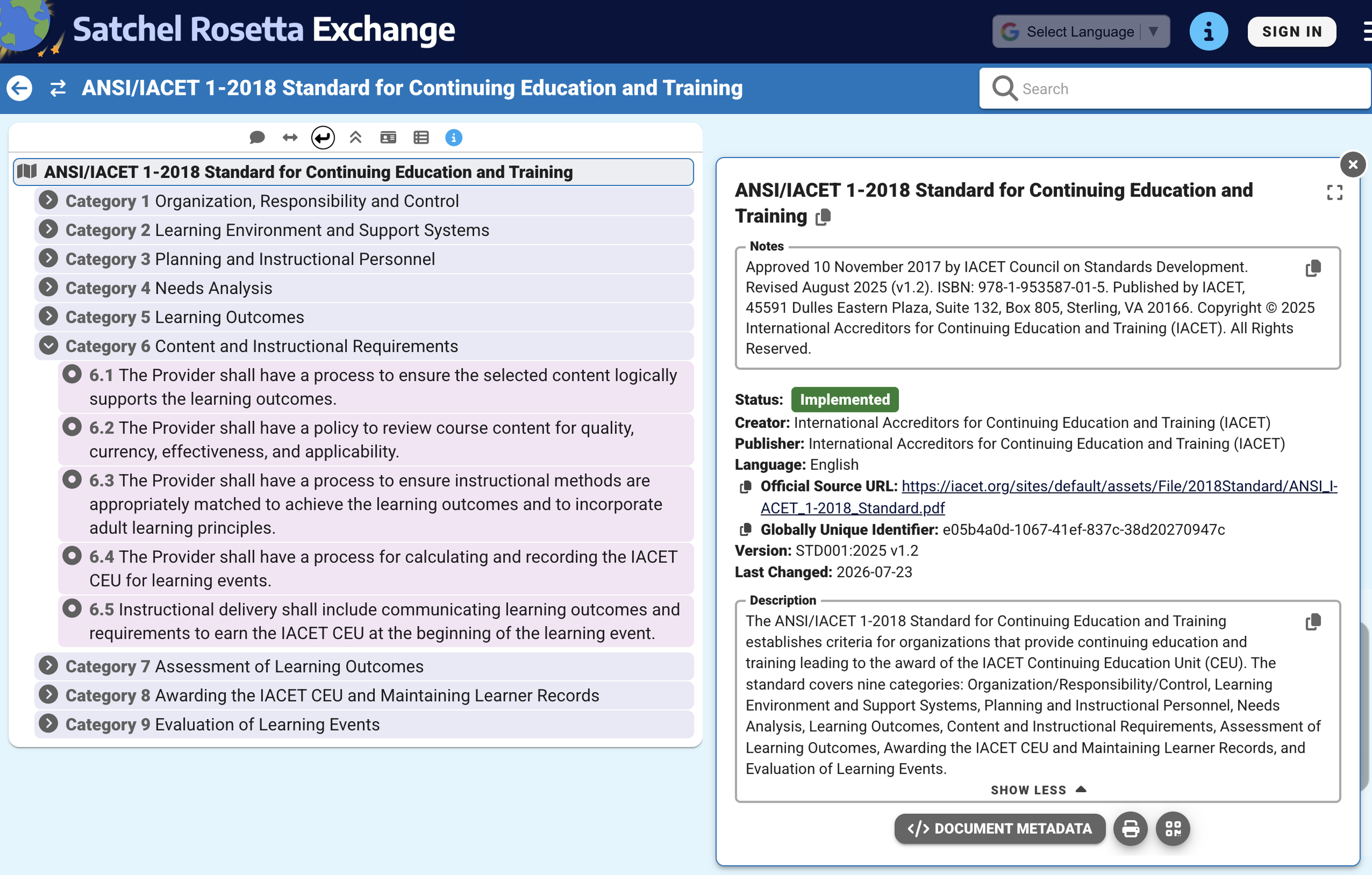
Consistent referencing across systems. Learning providers, LMS platforms, credentialing organizations, and employers can all point to the same standardized, digitally referenceable version of the framework, instead of everyone working from their own PDF copy or ad hoc interpretation.
Crosswalks between academic and workforce frameworks. Because CASE is the same format used throughout K-12 and higher education, it becomes far more feasible to express relationships between continuing education competencies and academic or occupational frameworks.
Machine-readable badge and credential metadata. For badge and micro-credential issuers, this means the competencies underlying a credential can be published, referenced, and verified using standardized identifiers rather than free-text descriptions that don't travel well between platforms.
Better data portability for non-credit learning. As CGLT President and Founder Pepper Williams noted, this work bridges a critical gap between non-credit workforce education and the broader ed-tech ecosystem, allowing continuing education quality benchmarks to be dynamically referenced and integrated across enterprise learning platforms with the same precision and data portability that formal academic frameworks already enjoy.
Who Should Care
This shift is directly relevant to three groups in particular:
Higher education institutions running continuing education, extension, or workforce-development programs now have a clearer path to aligning non-credit offerings with recognized, machine-readable competency frameworks.
HR and workforce-development professionals evaluating training vendors or building internal L&D competency models gain a standardized way to compare and align skills frameworks across providers, rather than reconciling incompatible spreadsheets and PDFs.
Badge and credential issuers get a foundation for expressing exactly what competencies sit behind a credential, in a format that other platforms can actually consume.
Publishing in CASE
IACET's implementation was completed in partnership with Common Good Learning Tools (CGLT), using our Satchel platform which is purpose-built for exactly this kind of work. Satchel gives standards issuers, whether that's a professional association, a state workforce agency, a university continuing-education division, or a credentialing body, the tools to publish, manage, and exchange CASE-coded competency frameworks, including converting existing standards from formats like PDFs, Word docs, or spreadsheets into fully compliant CASE. Organizations can also make their CASE data available more broadly through Satchel Rosetta Exchange, a shared repository that makes frameworks easy for other vendors to discover and consume.
If your organization is sitting on a workforce or credentialing framework that only exists as a static document, IACET's move is a useful preview of where the field is headed and a reminder that the infrastructure to make that framework interoperable, referenceable, and connected to the broader learn-and-work ecosystem already exists.
Learn more about Satchel as a CASE publishing tool at commongoodlt.com/satchel.
